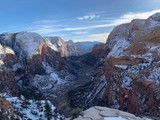
Nothing inspires quite like America's national parks. While summer remains a staple season for exploration, the peak crowds often overshadow the serenity these spaces were meant to provide. The ultimate workaround? Visiting national parks during the winter months. This is when crowds disappear, leaving you alone with the wildlife and the mesmerizing views.
Worried about the cold? You’re not alone. But many national parks offer surprisingly mild winter weather. Plus, even when temperatures drop, the right layers can make all the difference. Add in smaller crowds, snow-dusted scenery, and a fresh perspective on iconic landscapes, and it’s easy to see why winter is one of the best times to explore. To inspire your next cold-weather adventure, we’ve rounded up five of the best national parks to visit in winter—each one packed with epic views, serene trails, and unforgettable seasonal magic.
Zion National Park

Top winter experiences: Hike the Watchman Trail or Angel’s Landing Trail, spot mule deer near the Virgin River, and capture golden-hour photos of snowy sandstone cliffs.
As Utah's First Park, Zion impresses with dramatic sandstone cliffs and unforgettable canyon views. In winter, those vibrant red cliffs are dusted with snow, creating a palette you won’t see any other time of year. Better yet, the weather is mild — but possibly wet. Bring weather-proof gear so you can tackle popular routes such as the Watchman and the famously breathtaking and fear-inducing Angel’s Landing trail—which, unlike the Watchman, does require a permit. As with all the park explorations that we cover below, microspikes and hiking expertise are highly recommended if tackling trails in the rain or snow.
One of the best perks of visiting Zion in the off-season? No waiting around for shuttle buses. The park opens its roads to cars during the winter, so you can easily drive straight to your desired trailheads. This lends you extra time to chase down gorgeous winter photos that can only be captured when the light hits the snow and the red rocks just right.
Fortunately, Zion typically doesn’t dip below the 40s during the day in the winter months. But since precipitation is definitely a possibility, we recommend packing a wind and water-resistant Charter men’s full zip jacket or women’s half-zip Charter Anorak jacket as protective yet breathable and lightweight outer layers.
Mount Rainier National Park

Top winter experiences: Snowshoeing in Paradise, sledding at the Snowplay Area, and photography near Reflection Lakes.
What to pack: Insulated outerwear, waterproof gloves, gaiters, and a thermos for warm drinks.
Embrace the PNW spirit at Mount Rainier National Park, which is typically blanketed in snow by November. We’re especially partial to Mount Rainier in winter—it’s just a short drive from our Seattle headquarters, and home to Paradise, the snowiest place on Earth. That’s exactly what makes it special. If you know how to dress, you can experience paradise in its truest sense: the ethereal beauty of snow-covered meadows.
It’s no coincidence our Rainier puffer jackets and vests take their name from this legendary peak. Designed for the extremes of the Pacific Northwest and beyond, these sustainably crafted layers are built to thrive in deep snow and shifting weather. Best of all, they’re packable into their own pockets—making them ideal for tossing into your winter travel kit alongside wool socks, mittens, and your go-to trail mix.
Yosemite National Park

Top winter experiences: Ski at Badger Pass, skate at Curry Village, and hike to Lower Yosemite Falls.
What to pack: Waterproof boots, a warm insulated jacket, gloves, and hand warmers.
Gaze at giant sequoias and towering granite cliffs as you explore California's most-visited national park when it’s transformed by the hush of winter. Snow isn't guaranteed on the Yosemite Valley floor, but when it does fall, it blankets the landscape in magic—dusting El Capitan and Half Dome in white and lining trails with quiet stillness. Winter may thin the crowds, but Yosemite's signature waterfalls, like Bridalveil and Yosemite Falls, continue to flow, often framed by ice and frost for a dramatic seasonal contrast.
Carve powder at the Badger Pass Ski Area or enjoy a whimsical experience on skates at the Curry Village Ice Rink. Dress the part for Yosemite in winter: hit the rink or the slopes in a flexible, DWR-finish men's softshell hooded jacket that’s perfect for skating, skiing, and every exploration in between.
Yellowstone National Park

What to pack: A heavy-duty winter coat, wool layers, waterproof pants, and binoculars.
Top winter experiences: Book a snowcoach tour to Old Faithful, cross-country ski in Lamar Valley, and take a wildlife safari to spot wolves and bison.
More than 4 million people visit Yellowstone every year, and for good reason: roaring waterfalls, steamy geysers, bubbling paint pots ...what's not to love? While it's often associated with classic summer road trips, winter casts Yellowstone in an entirely new light—quieter, calmer, and even more surreal.
Glimmering snowfall turns Yellowstone into a true winter wonderland—often only accessible via snowmobile. That challenge is part of the appeal: snowmobile access adds a layer of solitude and adventure. Prefer to stick to your trusted car or SUV? No worries: The northeast section remains open to regular vehicles year-round, offering access to the stunning Northern Range.
The right gear will keep you toasty as you embrace the peace and quiet of a wintertime Yellowstone. Wear a big and tall hybrid recycled zip jacket for snowshoeing or a women's hybrid softshell jacket for cross-country skiing. Head to the Mammoth Hot Springs Area for gorgeous trails at every level.
Perhaps you've yearned to see wildlife at Yellowstone but dealt with human crowds during the summer instead. Here's your chance to spot bison, elk, or mule deer. Sign up for a wildlife winter tour so you can catch a glimpse of the elusive gray wolf. Bring binoculars to get a better view — and dress for warmth with an insulated men's puffer jacket so you can take it all in without getting the chills.
Grand Canyon National Park

If you dread the sweltering heat of a classic summer Grand Canyon adventure, consider a winter getaway. This can be a great introduction to wintertime national park excursions — snow remains likely (especially near the South Rim), but temperatures should be mild. Layer up to be safe, as the temperature can be tough to predict. A men's full-zip big & tall vest is a must when tackling hiking routes like the Rim Trail or even South Kaibab. Bring microspikes and trekking poles for maximum traction.
Not feeling up to winter hiking? No worries — there are plenty of other ways to enjoy dramatic views without worrying about snow or ice. Winter drives in the Grand Canyon are downright gorgeous, and better yet, traffic-free. The South Rim's roads are typically open, and, although tire chains aren't outright required, they're always recommended.
Again, layering is key for visiting the Grand Canyon in winter. After all, you'll want to take your time when you get out of your vehicle at the stunning viewpoints. Try a women's fleece pullover for maximum coziness.
Embrace Winter With Cutter & Buck
From snow-capped red rocks to steaming geyser basins, winter has a way of transforming even the most iconic landscapes into something new. With a bit of preparation—and the right layers—some of the most serene, inspiring national park experiences await during the colder months. Whether you’re snowshoeing through silence or watching wildlife cross a frost-dusted valley, winter invites you to slow down, stay curious, and see familiar places in a new light.